
Your needs, this model
Does it fit your priorities?
Would a clear cooking vessel itself be useful, rather than a window in an opaque drawer?
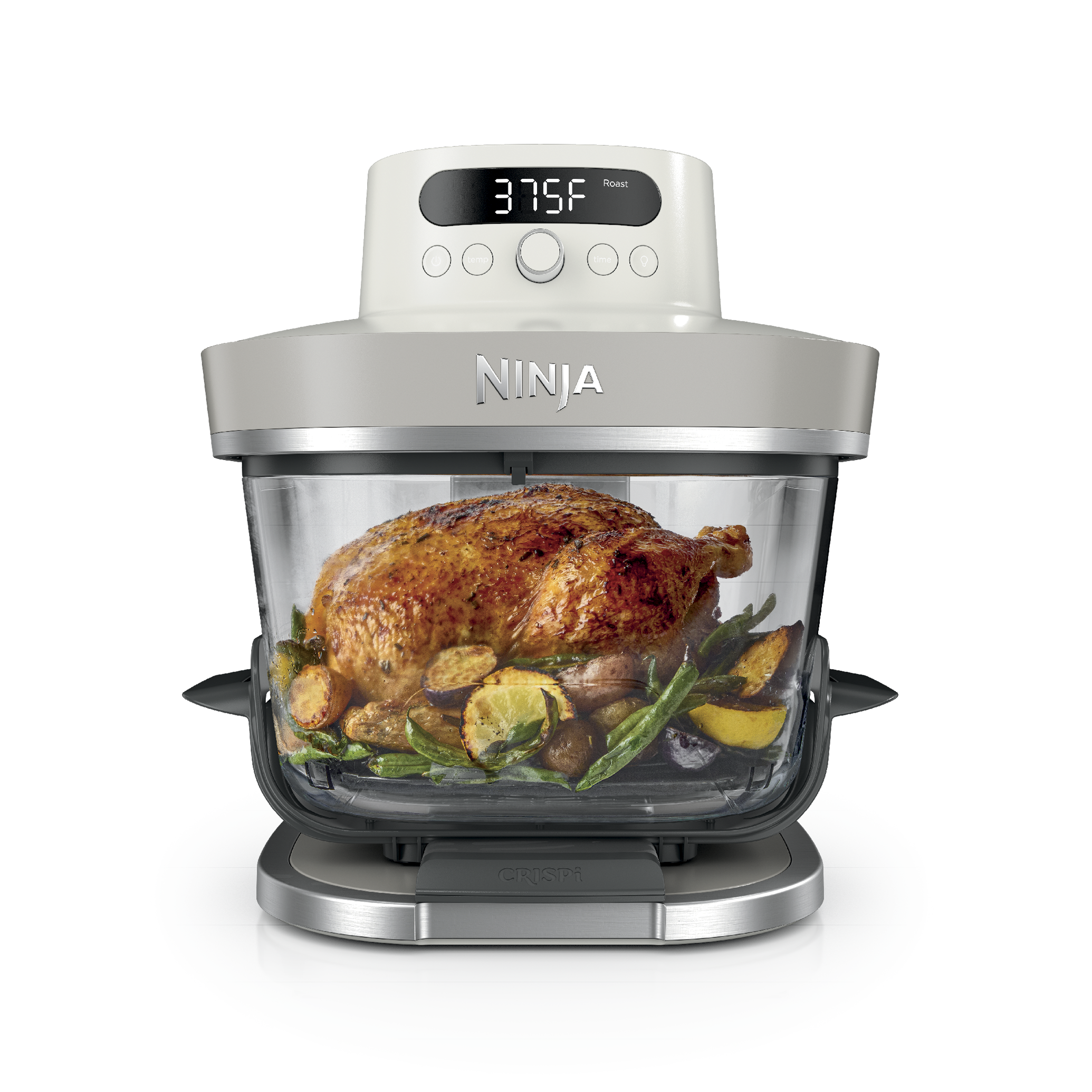
AS101LG uses CleanCrisp glass containers seated under the powered top unit. That is a visible vessel, not a basket window.
Explore this need in the finder →Do you need one or two independent cooking zones?
The AS101LG operates one glass pot at a time in one zone. The two included pots are separate batch sizes, not a synchronized pair.
Explore this need in the finder →Would a built-in pull-out drawer be essential?
This is a top-mounted pod over a glass cooking container, not a sliding basket.
Explore this need in the finder →Is a 6-quart maximum cooking vessel a useful minimum?
The fixed Bone listing itemizes a 6-qt and a 2.5-qt container; they are used one at a time.
Explore this need in the finder →Do you need a named Dehydrate cycle?
The product page names Dehydrate as one of six modes.
Explore this need in the finder →Is a maker statement on food-contact surfaces a hard requirement?
The SharkNinja FAQ says food-contact surfaces are designed without PFAS/PTFE; this remains a maker claim, not an independent test.
Explore this need in the finder →Must both voltage and frequency be documented for U.S. mains?
The AS100 guide states 120V~, 60Hz and 1,800W, while model functions may vary.
Explore this need in the finder →The Ninja Crispi Pro AS101LG is the fixed Bone-color package in SharkNinja’s Pro glass-vessel line. Its defining choice is not a clever basket shape but a different loading routine: food goes into a removable glass container, a powered top unit sits over it, and the adjustable base supports the container at one of three heights. The exact page lists a 6-quart and a 2.5-quart vessel in the box. Those are alternate batch sizes; one container is cooked at a time, so they do not add up to a two-zone machine.
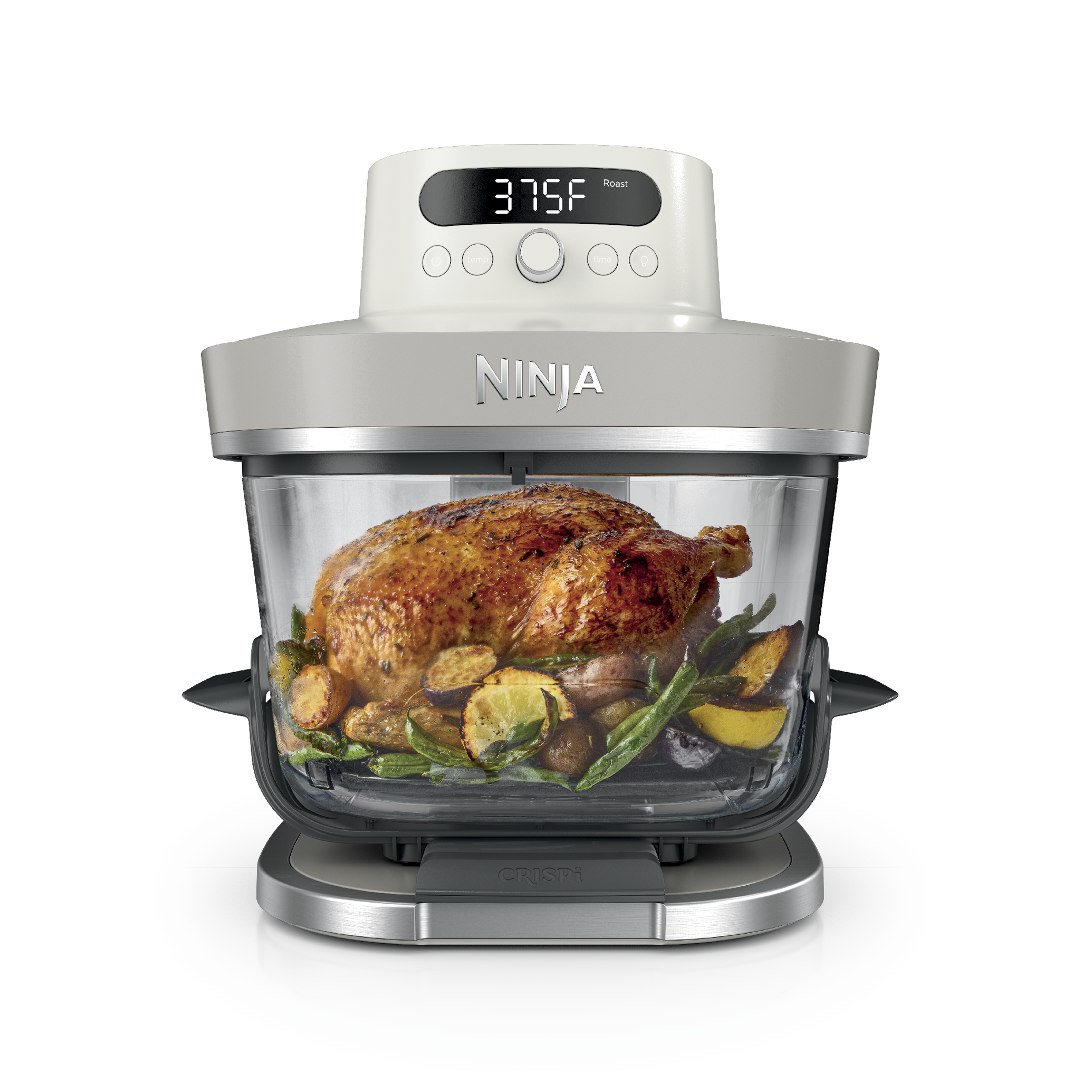
Two vessels solve a batch-size problem
The 6-quart pot gives this package a larger cooking vessel than the compact personal-pot systems in the same family, while the 2.5-quart pot offers a smaller alternative. The manufacturer says its 6-quart example can hold a 7.5-pound chicken and serve up to ten people. Treat that as the maker’s illustration, not a guarantee that any bird, side dish, or family meal will fit: shape and clearance matter, and the owner guide says food should not overflow the container. There is no second powered top, divider, or independently timed chamber. If you need a main and side to finish together from different programs, a two-zone fryer is a more direct fit.
That distinction changes how I would shop the AS101LG. Choose it if the benefit of visible glass and a choice of one larger or one smaller vessel matters more than simultaneous cooking. Look elsewhere if your routine depends on cooking two foods at once, shaking a conventional drawer basket, or transferring food to a dedicated oven tray. The vessel is transparent, but seeing food through glass does not remove the need to follow the recipe or check doneness.
Six listed functions, one cooking area
The U.S. listing names Max Crisp, Air Fry, Bake/Proof, Roast, Recrisp, and Dehydrate. Its comparison copy shortens one label to Bake; the AS100-series guide uses Bake/Proof and cautions that functions can vary among models. For that reason, this review treats Dehydrate and Max Crisp as named choices but does not promise a separate Proof program. Nor should “six-in-one” be read as six simultaneous ways of cooking. They are selectable modes for one container at a time. The page states that settings can reach up to 450°F; the guide and the inspected product page do not state a complete minimum temperature or timer endpoints. A household with a hard low-temperature or unusually long-timer requirement should verify the instructions supplied with its exact unit rather than infer a limit from the mode list.
Glass needs a different care routine
SharkNinja identifies the containers as borosilicate glass and says its food-contact surfaces are designed without PFAS and PTFE. These are manufacturer statements, not independent laboratory results or health conclusions. The AS100 guide confirms that containers, crisper plates, and plastic lids are dishwasher-safe; the powered station and modular base are not. It warns that the glass and plates become very hot, says not to use the containers on a stovetop or in an oven or broiler, and cautions against abrupt temperature changes. Do not add cold food or liquid to hot glass, set a hot vessel on a cool or wet surface, or use chipped glass. Leave the guide’s six-inch airflow clearance around the appliance while it operates.
This makes the AS101LG a less casual choice for someone who routinely moves cookware directly from freezer to heat or expects every component to go into the dishwasher. The glass can be a useful serving surface, but it is still a hot cooking vessel that needs stable handling. The “ADD POT” warning is also functional, not decorative: a pot must be seated correctly for the base to run.
Countertop, power, and exact package
The exact Bone listing gives 11.4 pounds and dimensions of 11.8 by 12.2 by 11 inches in the page’s length-width-height order. The package includes the 6-quart and 2.5-quart containers, modular base, two crisper plates, two lids, and a recipe book. The manufacturer’s AS100-series guide states 120V, 60Hz, and 1,800 watts; it is a series-level manual, not an AS101LG-specific booklet. That is useful electrical documentation but not a substitute for checking the product label and supplied guide. SharkNinja lists a one-year limited warranty. I have not independently established seller stock or this exact SKU’s recall status, so neither should be inferred from a current product page.
Who should shortlist the AS101LG?
For a cook who wants one visible glass vessel, a smaller batch option alongside a 6-quart pot, and no need for separate zones, the fixed Bone kit is a coherent package with its contents clearly itemized. Its advantage is the container-based format and the ability to alternate sizes; the trade is a single cooking area, hot glass handling, and less certainty about low-temperature and timer boundaries than a fully specified conventional basket routine may demand. Compare its contents with the build-your-own finishes before buying: the similarly colored AS101LGSN is a separate bundle listing, not merely a duplicate name, and its accessory-selection structure changes what may arrive. If two foods need different settings at once, choose a documented dual-zone layout instead.
Sources: SharkNinja AS101LG product page and SharkNinja’s AS100 Series Owner’s Guide (series guide bytes archived from a retailer static-file CDN; the guide is manufacturer-authored).
Key details at a glance
| Pull-out basket units | 0 |
|---|---|
| Maximum independent cooking zones | 1 |
| Combined nominal capacity | 6 qt |
| Highest documented setting | 450°F |
| Cooking functions | Product pages name six functions including Bake/Proof and Dehydrate; AS100 guide lists the combined Bake/Proof mode and cautions functions may vary by model. No separately selectable standalone Proof mode is asserted. |
| Basket and crisper-plate material | SharkNinja FAQ states food-contact surfaces are designed without PFAS/PTFE. This is the manufacturer disclosure, not an independent lab test or health conclusion. |
| Exact configuration note | This is the fixed standard Bone kit, not one of the Build Your Own listings. The exact page itemizes a 6-qt and a 2.5-qt vessel. |
| See-through cooking window | No |
| Dishwasher-safe pan or basket | No |
| Listed power | 1800 W |
| Listed supply | 120V~, 60Hz; 1,800W per AS100 Series guide |
Use the exact model’s instructions for operating limits, supplied equipment and version differences.
Sources for this assessment
Read the exact model before choosing a cooking routine.
Separate basket layout, actual controls and cleanup claims from the name on the box.