
Your needs, this model
Does it fit your priorities?
Would one digital pull-out basket work, or must two foods have separate synchronized settings?
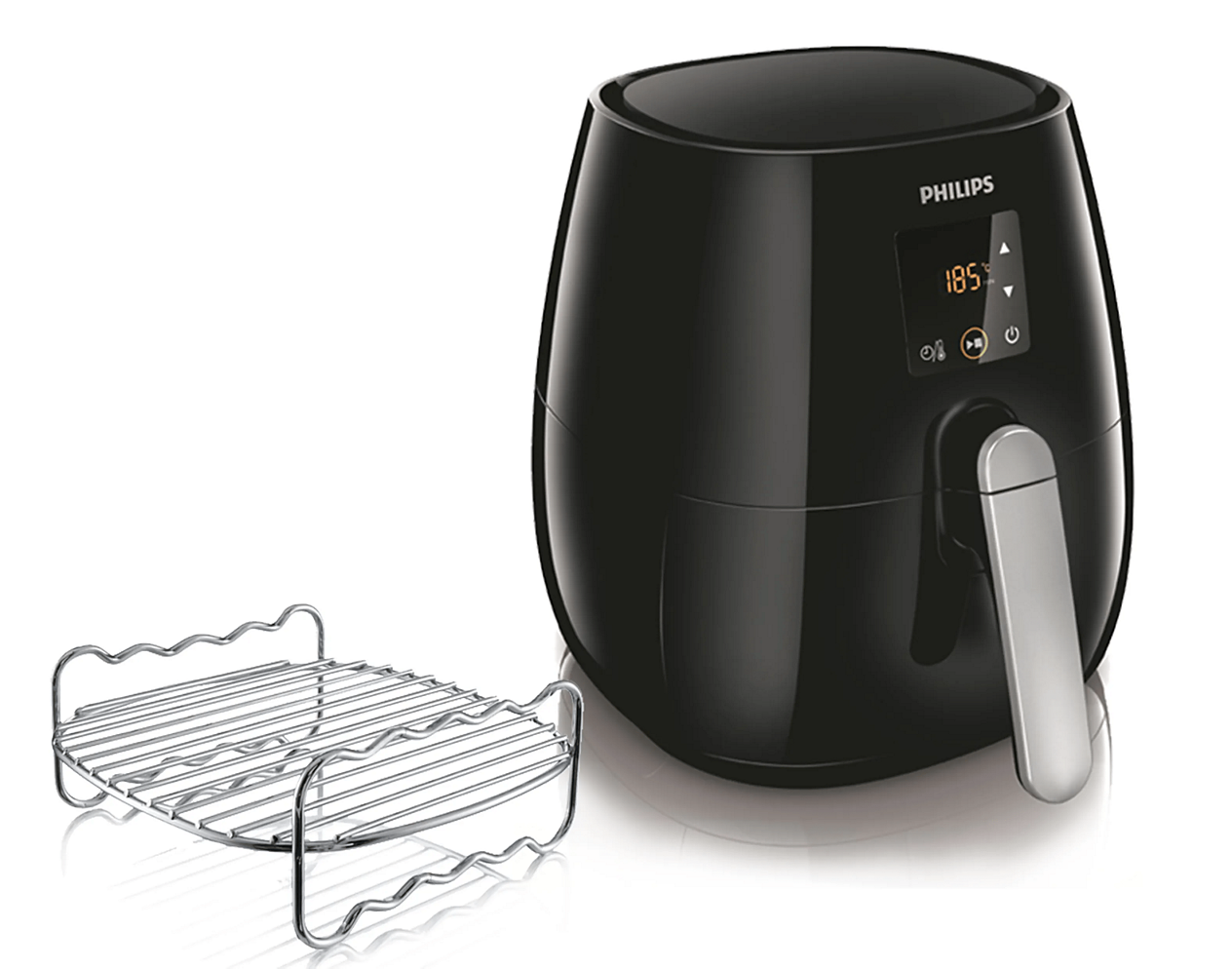
HD9230/26 has one digital basket and one schedule. A double-layer accessory is not an independently controlled second zone.
Explore this need in the finder →Is a documented 120 V / 60 Hz supply mandatory?
Philips exact sheets conflict between 110 V and 120 V, and frequency is not established as 60 Hz in the complete exact record. It does not pass the hard condition.
Explore this need in the finder →Do you require a 4-quart manufacturer-listed volume or PFAS-free disclosure?
The exact page gives 800 g, not quart volume; no exact PFAS-free claim is documented. Those hard filters cannot be met from unknowns.
Explore this need in the finder →The Philips Viva Collection Digital Airfryer HD9230/26 is a discontinued, single-basket model whose main distinction from its analogue-era cousins is local digital time and temperature selection. Philips' exact U.S. page identifies this suffix, lists an 800 g basket and promotes air frying, baking, roasting, and grilling. There is also a real documentation conflict: two exact Philips specification records report different input voltages, 110 V and 120 V. Treat this as an earlier-model reference and do not let a U.S. page location or one sheet settle an individual unit's electrical requirements.
A digital interface, not a dual fryer
The control panel and manual describe button-based digital selection on the front of a pull-out appliance. Philips' exact specification material lists a timer up to 60 minutes and temperature up to 390°F. The product page names air fry, bake, roast, and grill; no evidence in the reviewed exact documentation establishes a connected phone system or remote start. It remains a local-control appliance, not a smart fryer.
The HD9230/26 has one removable drawer and one cooking schedule. The separate double-layer rack that appears with the product is an accessory, not a second cooking zone: adding a raised layer may let you arrange food vertically, but both levels remain in the same hot-air cavity and share one selected time and temperature. Philips' exact technical material describes a double-layer accessory, while the current support page lists compatible accessory HD9904/00; whether a particular used unit includes it is not established. Do not treat a photograph or compatible-part list as a package inventory.
Small-batch planning is clearer in grams than quarts
The manufacturer gives 0.8 kg / 800 g as basket capacity. That is a mass figure, not a nominal volume and not a fixed serving count. A pile of compact frozen food and a looser arrangement of larger pieces use the basket differently. If you have an essential minimum stated in quarts, this model cannot satisfy it from the available manufacturer record; converting 0.8 kg into quarts would confuse food mass with the appliance's pan volume.
A one-basket plan works for a modest meal or a sequence of sides. It does not provide two separately scheduled foods that finish together. When the rack is present, you still need to judge the recipe arrangement within one basket and follow the instructions for turning or shaking food where called for. Philips lists no basket window, no synced finish, no second independent zone, and no documented dehydration setting. The extra vertical rack can change how you lay out some food, but it doesn't change those questionnaire answers.
Do not smooth over the electrical record
Philips' exact product page is a U.S. listing and its embedded model data includes 110 V / 1,425 W. An exact Philips sheet dated 2019 says 120 V / 1,425 W, while another exact sheet from 2023 says 110 V / 1,425 W. Both name the 0.8 kg basket and /26 model; they are not evidence for a different sibling. Because Philips' own records conflict, the appropriate match value for published supply voltage is unknown rather than whichever number is more convenient. A strict documented 120 V / 60 Hz request must reject the HD9230/26. For an existing appliance, read its own rating label and instructions before plugging it in; don't infer compatibility from watts, a domestic hostname, or a nearby HD9238 code.
The exact source sheet says the temperature reaches 390°F; the inspected scan of the HD9230 family manual shows the digital operating controls and basket/care instructions, but the manual cover identifies HD9230 rather than printing /26. The current exact U.S. support page lists recipe booklets and a compatible rack rather than exposing this user manual in its visible document list. The manufacturer product-page data links the scanned family manual, so it can support a general explanation of controls and care, not a replacement for a rating plate or proof of every suffix detail. A minimum temperature, exact lower timer bound, and nominal quart capacity remain unknown.
What cleaning and lifecycle tell you
The linked family instructions describe a removable pan and basket with nonstick surfaces and dishwasher-safe care for the removable parts. Philips does not name the coating chemistry or make an explicit PFAS-free statement for this exact suffix. If a named surface material or documented PFAS-free claim is essential, do not treat a generic nonstick label as a pass. Inspect the actual coating, pan rails, basket, power cord, buttons, and latch on a used unit; this page cannot tell you the condition of one.
Philips marks the exact model discontinued. That supports keeping it in an opt-in comparison for owners and shoppers examining used stock, not calling it available new or assigning a current warranty. Exact recall status, current parts supply, original-box contents, and present seller condition remain unverified. The manual is valuable for operating and cleaning questions, but it cannot change the discontinued status.
Where the questionnaire changes the recommendation
If you opt in to earlier models and want one pull-out basket with digital front-panel control and a timer longer than the 30-minute analog Viva models, the /26 offers a different operating plan. It should be excluded when a second basket, separate synchronized cooking, a window, a quart-capacity threshold, or documented 120 V / 60 Hz is essential. A digital display is a real distinction; it is not evidence of phone control, automatic sensing, or a twin-basket feature.
For a current alternative with a settled domestic electrical record, compare the COSORI TurboBlaze CAF-DC601-KUS, which is a larger nominal-volume single-basket configuration with a documented U.S. supply. It has a different interface and basket design; it is not a performance substitute established by testing here. If an old Viva is already on your counter, the HD9230/26 page is useful for model identification, one-drawer operation, and understanding why the rack cannot make two recipes independent. The exact suffix and the conflicting voltage evidence should remain visible in any purchase decision.
Key details at a glance
| Pull-out basket units | 1 |
|---|---|
| Maximum independent cooking zones | 1 |
| Highest documented setting | 390°F |
| Cooking functions | Philips product-page material describes the traditional cooking functions in the family. No Dehydrate mode is documented in the exact evidence reviewed. |
| See-through cooking window | No |
| Dishwasher-safe pan or basket | Yes |
| Listed power | 1425 W |
Use the exact model’s instructions for operating limits, supplied equipment and version differences.
Sources for this assessment
- Philips U.S. all-products page 1
- Philips U.S. exact-model product page
- Philips U.S. exact-model support page
- Philips manufacturer manual linked to the exact model or its exact product-page data
- Philips exact-model gallery asset
- Philips exact-model specification sheet; browser source inspected, direct byte archive unavailable
- Philips exact-model specification sheet; browser source inspected, direct byte archive unavailable
- Philips U.S. all-products page 1 observed row
Read the exact model before choosing a cooking routine.
Separate basket layout, actual controls and cleanup claims from the name on the box.